Polyaspartic floor coatings explained
The layer you see, and what it depends on.
By Hiroma Surfaces · Buying guides · 5 min read · Updated
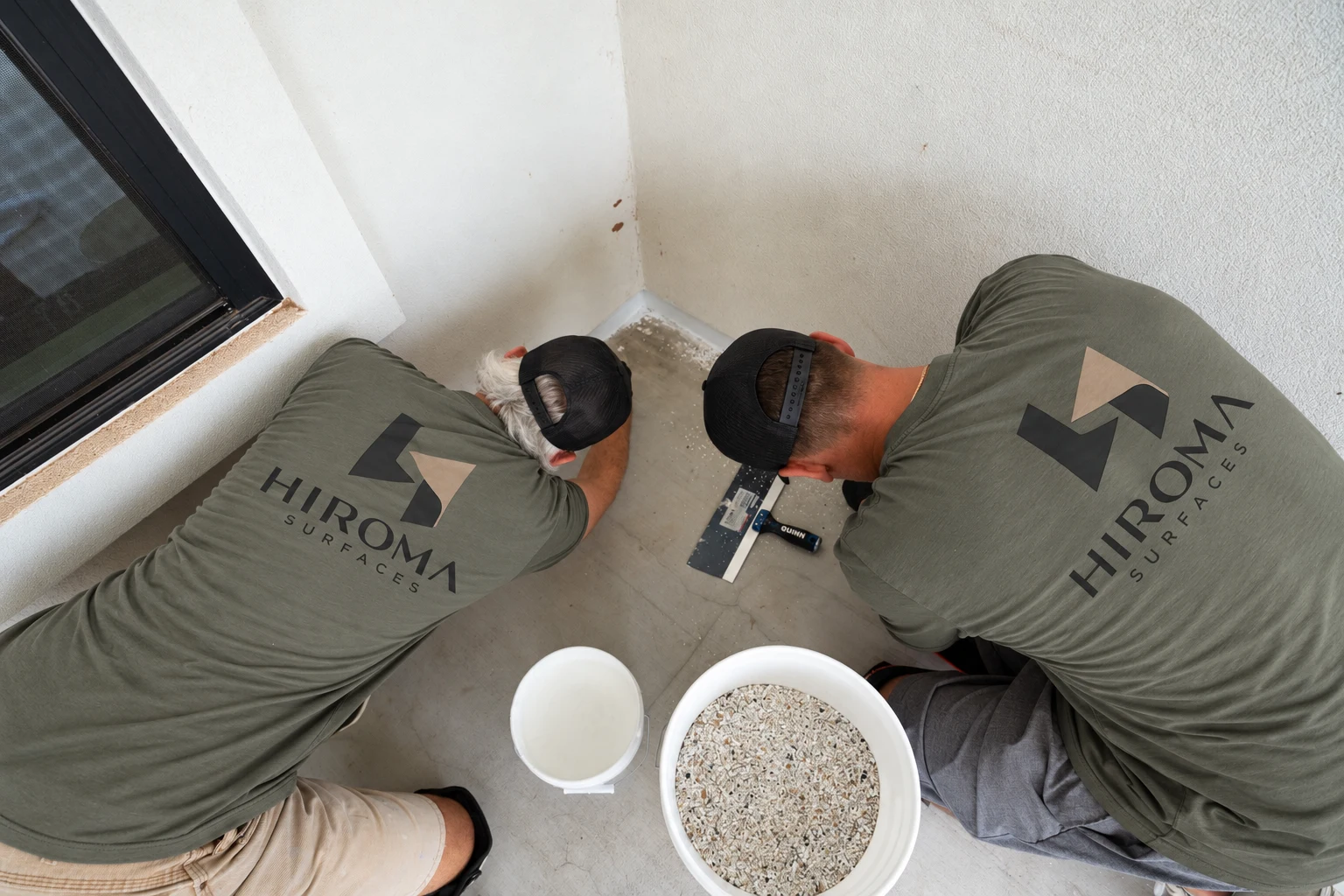
Polyaspartic is a type of coating used as a topcoat on concrete floors. In a Hiroma floor, it's the final layer: it seals the decorative flake and forms the surface you walk and park on. It's one layer of a system, and it depends on the layers beneath it.
In this article8 sections
- Where polyaspartic sits in a floor coating system
- How polyaspartic differs from epoxy and polyurea
- What to ask an installer
- What the topcoat does—and doesn't tell you
- From your first photos to a floor you can use
- Fast installation is not the only decision
- What life with the finished floor looks like
- A few questions
Where polyaspartic sits in a floor coating system
Non-acid preparation
Readies qualifying slabs for the coating system, so the layers above have a prepared surface to build on.
Polyurea basecoat
Builds the body of the floor on the prepared slab and gives the decorative flake something to sit in.
Decorative flake
Gives the floor its color and texture. You choose the blend, and you can preview it on your own photo.
Polyaspartic topcoat
Seals the flake and forms the surface you see and use. It's the layer you notice, and it depends on the layers under it.
How polyaspartic differs from epoxy and polyurea
Epoxy, polyurea and polyaspartic are different coating chemistries. Each shows up in floor coating systems, often in different layers, and each has its own strengths. Epoxy is the most familiar name, which is why many people call any coated garage floor an epoxy floor. Polyurea and polyaspartic are related chemistries, and they're often used together in layered systems.
Which one is right depends on the space, the slab and how the floor will be used. We build our system around a polyurea basecoat and a polyaspartic topcoat. Our comparison guide walks through the differences so you can decide for yourself.
Polyaspartic vs. epoxy for your garage floor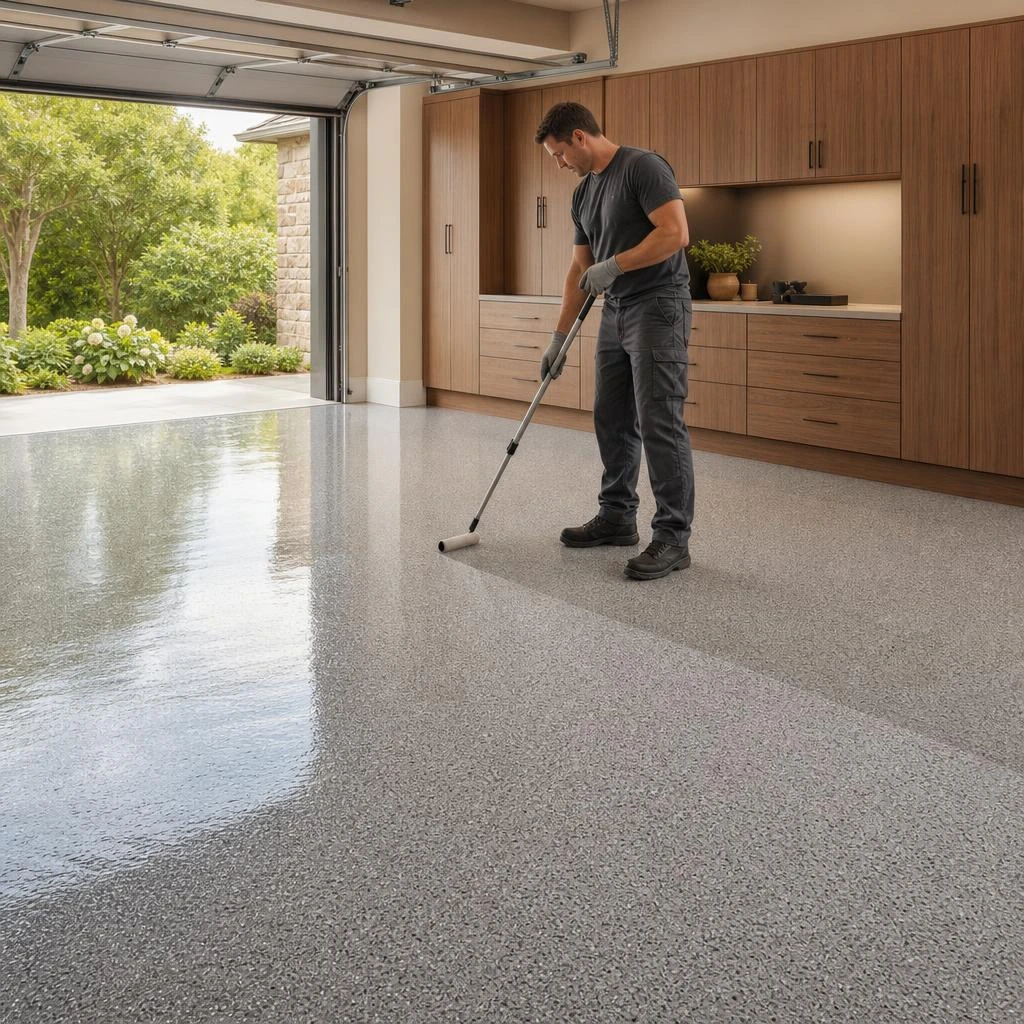
What to ask an installer
- What layers make up the system, and what chemistry is each one?
- How will you prepare my slab?
- How will you handle cracks and any existing coating?
- What does the warranty cover, and can I see it in writing?
- What will the project look like day to day?
What the topcoat does—and doesn't tell you
Think of polyaspartic as a description of the coating material, not a complete promise about the floor. The topcoat forms the exposed surface over the decorative flake. Its appearance and suitability also depend on the particular formulation, the layers underneath and how the system is installed.
Two proposals can both use the word polyaspartic and still describe different work. One might include removal of an old coating and repair allowances; another might assume bare concrete in good condition. Before comparing prices, establish whether those assumptions fit your garage.
Don't translate a chemistry name into “never scratches,” “safe when wet” or “lasts forever.” Ask for product information and written limitations for the exact system. Your garage's exposure, traffic and maintenance are part of that discussion.

From your first photos to a floor you can use
Show the whole project
Send an overall view, approximate size and close-ups of cracks, stains or old coating. Explain whether you park, exercise or work in the garage. Photos help start the quote, but they don't confirm the slab's moisture condition or final preparation.
Agree the system and scope
Ask how the slab will be evaluated, what each layer is and what repairs are included. Confirm edges, steps and joints rather than assuming every visible concrete surface is in the price.
Choose from an actual sample
Use a photo preview to narrow down the blends, then check a physical sample where possible. Screens, lighting and the scale of the flake change what you see. Ask how the selected finish will look in the proposed system.
Plan the handover
Get instructions for walking, parking, cleaning and returning heavy equipment. These can have different waiting periods. Keep the care guide and warranty, and make sure you know who to contact with a question.
Fast installation is not the only decision
A short installation schedule can be convenient, but the important question is when your particular floor can return to each kind of use. Weather, substrate and product instructions can affect that plan. Don't book moving equipment back into the garage on the strength of a general “fast cure” headline.
Tell your installer if you need access through an internal garage door, have a freezer that can't easily be moved or need parking for more than one vehicle. Ask what you must clear and whether any items can remain. These practical details often matter more to your week than the terminology on the quote.
What life with the finished floor looks like
A coated floor still needs care. Remove loose grit with soft tools, clean spills promptly using an approved method and avoid dragging heavy storage across the finish. Ask for the cleaner and dilution recommended for your installed system rather than choosing the strongest garage cleaner on the shelf.
If you notice lifting, a new crack or a recurring damp patch, photograph it and ask for advice before sanding or recoating. A visible symptom doesn't establish the cause, and a DIY repair can complicate the assessment. See our care guide for a practical cleaning walkthrough.
Read the coated-floor care guide