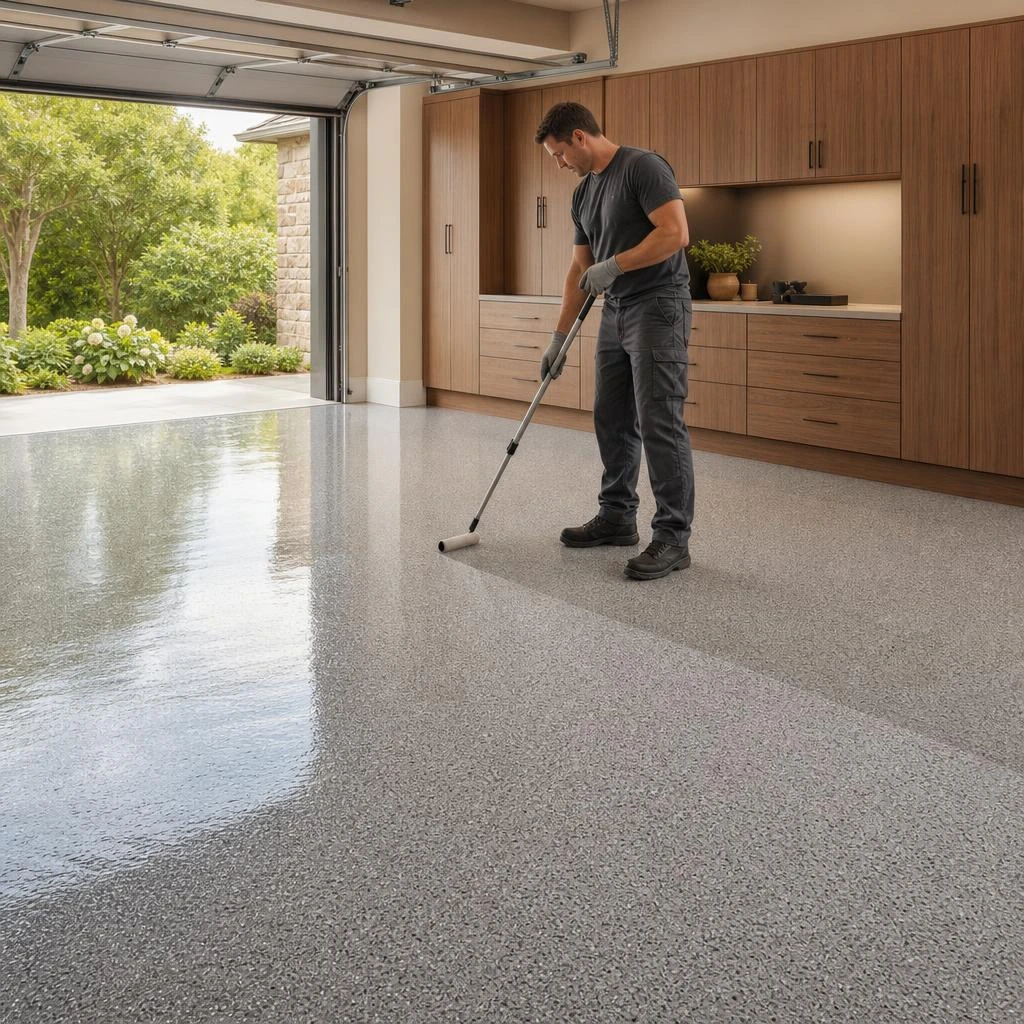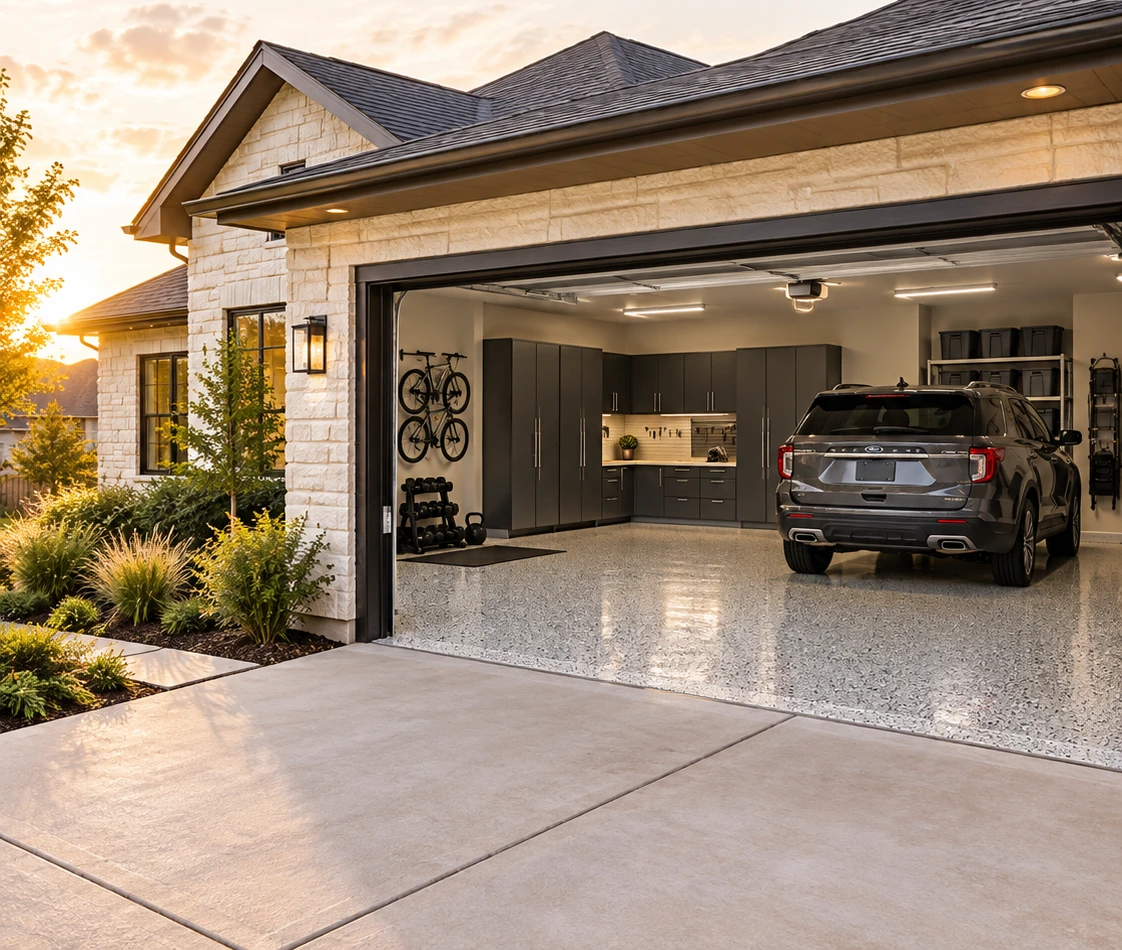
Is epoxy flooring worth it?
Before you spend a weekend, or a lot more, on the garage floor.
By Hiroma Surfaces · Buying guides · 5 min read · Updated
For many homeowners, yes. A coated floor gives bare concrete a finished look and a surface that's easier to clean. It's a tougher call if the slab has a moisture problem or is in poor condition, and any coating shows wear over time. The best way to decide is to have the slab evaluated first.
What you gain
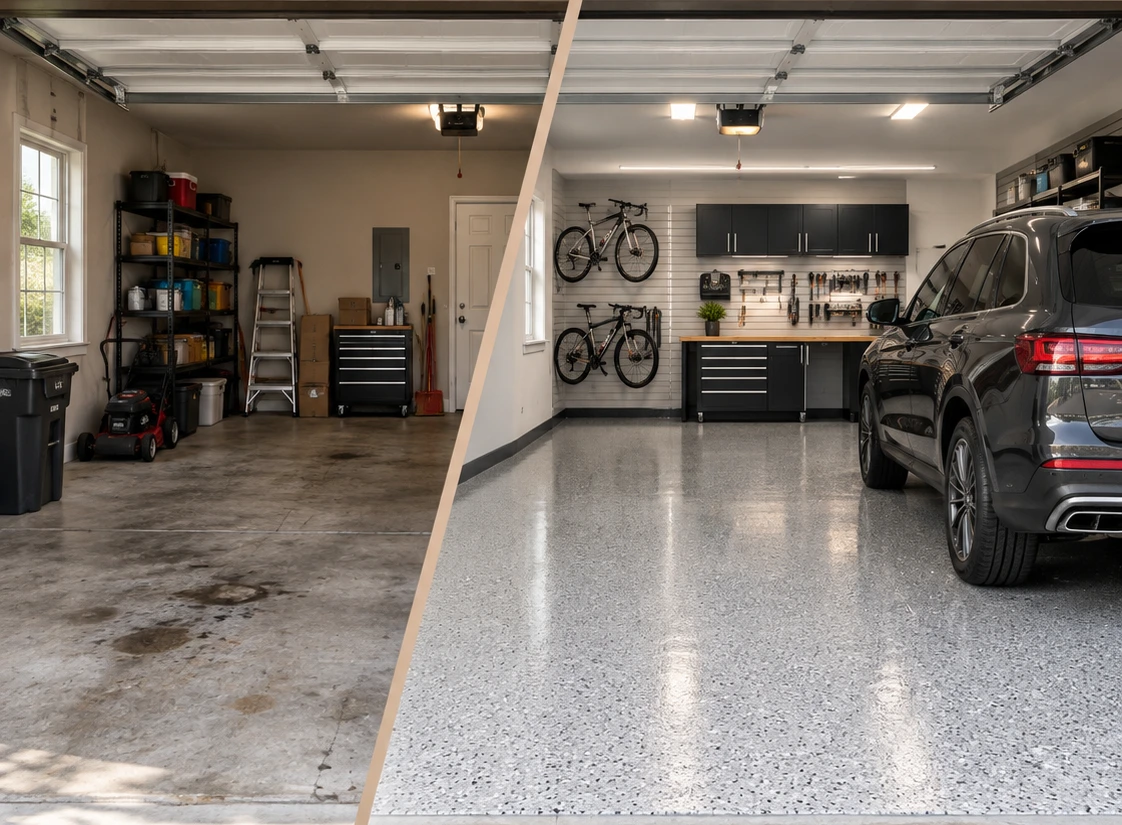
A finished look
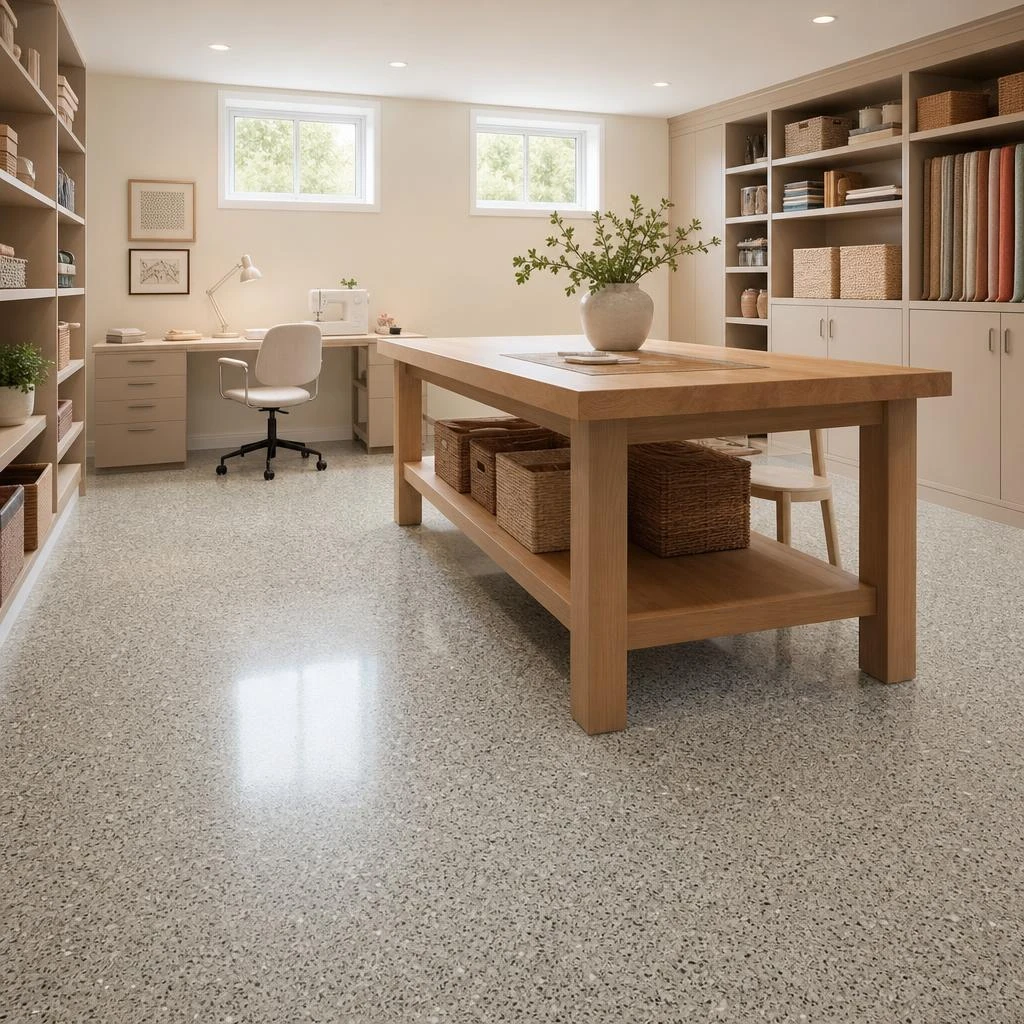
A coated floor makes a garage, patio or basement feel like part of the house instead of a place you put things.
A defined cleaning routine
A coated surface can make everyday cleanup more manageable, but it still needs care. Clean spills promptly with an approved method; no finish is immune to every stain.
A finish you choose
Decorative flake blends let you pick a color and texture you like, and preview it on your own photo.
One system
A layered system, installed together, works as one instead of as separate coats sitting on top of each other.
What to weigh
Cost
Price depends on the floor's size, its condition, the preparation it needs and the finish. Our cost guide shows what moves it.
Preparation
Every coating depends on the slab beneath it, so how the slab is prepared matters as much as what goes on top.
Wear over time
Coatings show wear as they age. Ask any installer what to expect and what the warranty covers, and get it in writing.
Moisture
Slab moisture can affect whether the proposed coating is suitable. Ask what assessment or testing your floor needs and how any issue would change the plan.
When it's not the right choice
Unresolved moisture can make a proposed coating unsuitable. Some slabs are badly damaged and need repair or replacement first. And there's little point coating a floor you're about to remove. Have those issues evaluated before you pay for a cosmetic upgrade.
Start with the problem you actually want to solve
If you're tired of an unfinished-looking garage, a decorative coating may address exactly what bothers you. If you're trying to fix a leak, flatten a sloping slab or stop a moving crack, a coating alone is not the answer. Write down your main reason for the project before comparing finishes.
For example, a household that parks every day might prioritize simple cleanup and a coordinated appearance. Someone setting up a workshop needs to discuss equipment loads, dropped tools and the work done there. A homeowner moving soon may care more about disruption and budget than customizing every detail. None of those priorities makes a particular chemistry automatically best.
Tell the installer what a successful result means to you. That turns “is it worth it?” into a question about your use of the garage, rather than a generic promise about increasing home value. We don't have evidence to promise a particular resale return.
Build a complete budget, not just a price per foot
Measure the approximate length and width, then ask the installer to confirm the area. Find out whether the quote includes edges, steps, removal of an existing finish, crack treatment and any special preparation. Those items can make two similar-looking totals describe different work.
Include the practical costs too: where the car will park, whether you need temporary storage and who will move heavy items. If you compare a DIY kit with a professional proposal, include your tools, preparation, disposal and time—not just the material in the box.
Avoid assuming the cheapest starting price is a saving or the highest price guarantees better work. Ask each installer to state assumptions and exclusions in writing. If an inspection changes the scope, understand how that change is approved before installation begins.
What affects a garage floor coating quoteWhen waiting is the better decision
Pause if water is entering the garage, a crack is changing or a previous coating is peeling without a known cause. A new surface can hide a symptom without fixing the underlying issue. NRMCA explains why moisture evaluation matters for floor coverings and coatings; the proposed system's limits still need to be checked.
Also wait if building work will soon damage or replace the slab, or if you cannot clear the garage for the required schedule. Planning the job after that work can avoid paying twice. A useful estimate should help you decide what needs to happen first, not pressure you to skip an unresolved problem.
Read the warranty before treating it as value
Ask what the written warranty covers, who provides it, what care is required and what is excluded. A headline about long coverage does not mean every scratch, stain, crack or moisture-related issue is covered. Find out how a claim is made and whether a repair can differ visibly from the surrounding floor.
Keep the quote, installation paperwork, care instructions and dated photos together. If the benefit you care most about isn't described in the proposal or product information, ask for clarification rather than assuming the warranty supplies it.
How to decide
Have the slab evaluated
Start with someone looking at the actual concrete, before you commit to anything.
Get a written quote
Spell out what's included, and compare what's included, not just the total.
Ask the seven questions
Our cost guide lists them. Ask for the warranty terms in writing.
Sources and further reading
These references support the general guidance above. They are not endorsements of Hiroma or specifications for our installed products. Your floor’s written product, installation and care instructions take priority.